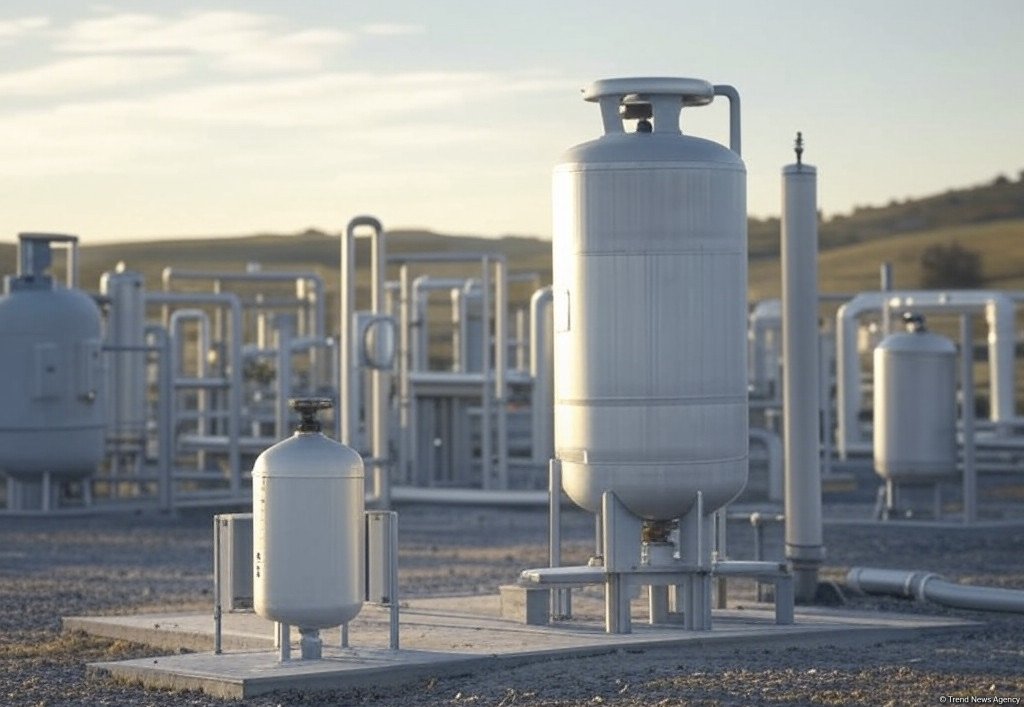
Azerbaijan cuts natural gas imports in 5M2025
Azerbaijan significantly cut its natural gas imports by over 30% in both volume and value during the first five months of the year, bringing in nearly 200 million cubic meters worth around $30 million.
Azerbaijan significantly cut its natural gas imports by over 30% in both volume and value during the first five months of the year, bringing in nearly 200 million cubic meters worth around $30 million.
In the first quarter of the current Iranian year, East Azerbaijan province exported nearly 740,000 tons of goods worth around $390 million, mainly to countries like T
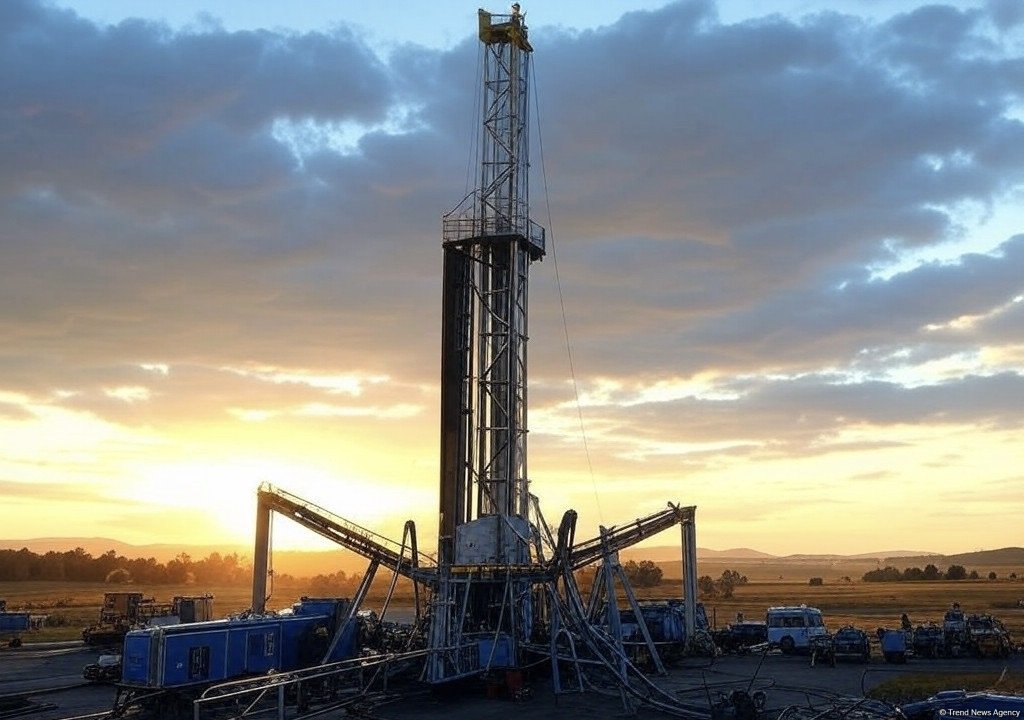
Iran has launched a mobile oil separator at the South Azadegan oil field, enabling the daily extraction of around 1,500 barrels of crude from low-output wells. The facility is part of broader efforts to boost production at a field with over 28 billion barrels in reserves.
Iran has purchased around 5. 6 million tons of wheat from farmers under a guaranteed procurement program since early April, with payments for about half of it already made. The government has allocated nearly $1.
Azerbaijan’s construction sector continues to attract increased financing, with business loans rising by 6.2% year-on-year to reach 1.4 billion manats ($823 million) as of June 1, 2025. This steady growth reflects expanding investment and confidence in the sector, which plays a key role in the country’s economic development and infrastructure expansion.
Electricity production at Azerbaijan’s thermal power plants experienced a slight decrease of less than one percent in the first half of the year, totaling around 11.5 billion kWh. Despite this, the country’s overall electricity generation grew by more than two percent, supported by increased output from renewable and hydroelectric sources.
Iran expects its trade turnover with Serbia to grow to between $300 million and $400 million by early 2027, driven by expanding economic ties and access to European markets through Serbia’s free trade zones.
Electricity generation at wind power plants in Azerbaijan dropped to 21 million kWh in the first half of the year, marking a nearly 30% decline compared to last year. Despite this, overall electricity production grew by 2%, supported by increases in other energy sectors.
Iran's banking sector experienced a significant surge in loan issuance, with a 48.3% increase in the first quarter of the Iranian year, reaching approximately $19.7 billion. This growth highlights strong credit support across key economic sectors such as industry, services, and commerce, signaling an active push toward economic development and recovery.
UNICEF Turkmenistan has launched two procurement calls: one for long-term logistics services and another for the supply of IT equipment to medical centers across all regions.
Iran’s steel industry saw a 4.9% decline in production during the first two months of the current Iranian year, continuing a downward trend observed over the past year. Despite the drop in crude and finished steel output, slight gains in sponge iron and iron ore concentrate hint at uneven momentum across the sector.
Electricity generation at solar power plants in Azerbaijan grew by nearly 10 percent in the first half of the year, reaching approximately 315 million kilowatt-hours. Overall, the country’s total power output saw a modest rise, supported by increased contributions from renewable sources.
Kyrgyzstan is forecast to maintain moderate economic growth through 2027, with GDP rising by 5.6 percent in 2026 and 5.4 percent in 2027. Inflation is projected to gradually decline but remain near the upper end of the central bank’s target.
Iran’s iron and steel exports grew significantly in the first two months of the current Iranian year, with total shipments reaching around 6. 4 million tons, up nearly 30% by volume compared to last year.
Solar power generation in Azerbaijan increased by nearly 20 percent in the first half of the year, reaching approximately 260 million kWh. This growth contributed to the overall energy sector, which produced goods and services worth around 1.74 billion manat during the same period.
Azerbaijan’s foreign direct investment in Uzbekistan rose by 8.6% to $16.6 million in Q1 2025, reflecting growing economic cooperation between the two countries. Despite a slight decline in overall foreign investments abroad, Azerbaijan’s strong investment performance domestically and targeted growth in Uzbekistan signal strategic regional engagement.
Azerbaijan invested $1. 05 billion in the transport and warehousing sector during the first half of 2025, marking a 13. 6 percent decline compared to the same period last year. Despite this decrease, the sector accounted for 22.
In the first half of the year, Azerbaijan produced nearly 19.4 billion cubic meters of marketable gas, marking an increase of around 200 million cubic meters from the same period last year. Meanwhile, overall output in the extractive industry declined by about 3 percent year-on-year.
Transport connectivity in Turkmenistan improved sharply in early 2024, with cargo and passenger traffic more than doubling. Infrastructure investments focused on highways and positioning Turkmenbashi Port as a transit hub.
The IMF expects Turkmenistan’s economy to maintain 2.3 percent real growth annually through 2030, with GDP rising to $139.4 billion. Inflation is projected to reach 8 percent and remain stable. The current account is expected to shift from surplus to deficit, while public debt remains low.
The EBRD highlights structural reform progress in Turkmenistan, including steps to cut methane emissions and expand green energy. The country adopted a new energy efficiency law, developed a 2025–28 Green Transition Plan, and launched a digital single window to streamline foreign trade procedures.
Global oil demand is expected to rise by just 700,000 barrels per day (kb/d) in 2025, marking the slowest annual growth since 2009, excluding the pandemic-hit year of 2020, according to the latest Oil Market Report from the International Energy Agency (IEA).
Uzbekistan's economy is recovering and growing due to increased gold prices and better budgetary management. Recent trade balance improvements, a reduced current account deficit, and greater private capital inflows have stabilized the Uzbek soum and upgraded its sovereign rating.
As of June 2025, Uzbekistan's POS terminal network experienced a slight decline, with the total number dropping to 426,111. Market leaders Hamkorbank, Xalq Bank, and the National Bank maintain significant shares, while smaller banks continue to hold minimal presence.
Iran’s caviar production grew by 17 percent last year, reaching 25.1 tons. Sturgeon meat output also rose 26 percent to 6,050 tons. The country exported over 7.5 tons of customs-declared sturgeon caviar, with more likely leaving through suitcase trade.
Deputy Foreign Minister of Kazakhstan, Alibek Kuantyrov, met with HydroPlus President Franck Del Rey to explore investment opportunities in Kazakhstan’s water management sector. Discussions focused on sustainable infrastructure, including hydraulic structure modernization.
On the domestic market, local businessmen signed a contract with the Turkmennebit State Concern for the supply of viscous petroleum road bitumen.
Azerbaijan's exports of crude oil and petroleum products to India fell sharply in both value and volume terms from January through August 2025 compared to the same period last year.
The adoption of mobile-banking services continues to rise in Turkmenistan, reflecting increasing demand for convenient, remote financial solutions. The growing user base highlights Turkmenistan’s ongoing efforts to modernize its financial ecosystem and expand digital banking accessibility across both urban and regional areas.
In H1 2025, Azerbaijan’s net financial assets grew by $3 billion, driven by direct ($0. 5 billion), portfolio ($1 billion), and other ($1. 5 billion) investments abroad. Net financial liabilities rose by $230 million, mainly due to an oil bonus ($450.
The international freight transport by road in Azerbaijan increased significantly both in value and volume from January through August this year.
From January through August 2025, Azerbaijan exported $7.97 billion to Italy, $2.29 billion to T
From January through August of the current fiscal year, Azerbaijan has demonstrated an uptick in the exportation of hydrocarbon resources and refined petroleum derivatives to the United Kingdom, characterized by increased volumetric output yet a diminished aggregate monetary valuation relative to the corresponding timeframe of the preceding year.
According to Argus’ latest analysis, Uzbekistan has experienced a sharp increase in rail imports of aviation kerosene in 2025, driven by strong airport demand, while gasoline shipments have declined amid higher domestic refinery output, Trend reports.
Azerbaijan projects continued currency stability through 2026, supported by steady exchange rates since 2018 and robust central bank reserves totaling $11.25 billion.
In 2026, Azerbaijan is expected to allocate 4.8 billion manat ($2.8 billion) for social protection and social security. This reflects a 2.55 percent increase compared to the approved forecast for 2025.
Azerbaijan’s consolidated budget for 2026 projects revenues of 44.8 billion manat ($26.45 billion) and expenditures of 48.7 billion manat ($28.73 billion). Both figures represent an increase over the 2025 forecast—2 percent for revenues and 2.2 percent for expenditures.
Between January and August 2025, Azerbaijan experienced a substantial increase in non-oil exports compared to the previous year. The nation's primary export destinations during this period were Russia, T
Azerbaijan’s imports from its top five trading partners, led by China, increased significantly in the first eight months of 2025, with total imports reaching around $13.6 billion. Despite a decline in exports, the country maintained a positive trade balance of approximately $1.6 billion.
Azerbaijan directed roughly $2.7 billion of capital investments into construction during the first eight months of the year, marking a 10 percent increase from the same period last year.
Remittances sent through fast money transfer systems in Azerbaijan have declined, with banks receiving around 1.5 billion manat from roughly 2.8 million transactions.
The strategic alignment of Georgia within the global marketplace is exemplified by its establishment of Free Trade Agreements (FTAs) with pivotal stakeholders, notably the European Union (DCFTA) and the People's Republic of China.
As of November 1, 2025, Azerbaijani banks and non-banks had invested 1. 69 billion manat ($991 million) in the industrial and manufacturing sector. This marked a monthly increase of 19. 3 million manat ($11.
As of November 1, 2025, Azerbaijani banks’ construction sector loan portfolio reached 1. 5 billion manat ($887 million). This was an increase of 9. 2 million manat ($5. 4 million) or 0. 6 percent compared to October 2025.
S&P Global Ratings reports that Uzbekistan’s Fergana Region maintains strong liquidity, supported by central government loans, though access to external financing remains limited and long-term debt capacity is constrained.
S&P Global Ratings has upgraded Uzbekistan’s Fergana Region to ‘BB-’, citing stronger national reforms and solid regional finances, marking a notable boost to the country’s subnational credit profile.
Loans to medium-sized businesses in Azerbaijan have escalated to approximately 2.27 billion manat, indicating substantial progression in both sequential and annual metrics.
The volume and number of transactions conducted in the National Real-Time Settlement System (AZIPS) in October significantly exceeded last year's figures.
By the end of October, Azerbaijan saw an increase in MasterCard transactions, while the use of non-resident cards also continued to grow.
The number of transactions using local cards in Azerbaijan decreased compared to last year, while their total volume showed a slight increase.